
Why it happens
The pulp becomes infected through deep decay, a cracked tooth, large or repeated fillings, or trauma. Once it is infected it will not heal on its own, and the infection can spread if it is left.
A root canal treats infection in the soft pulp inside a tooth, clearing it out to save the tooth rather than lose it.
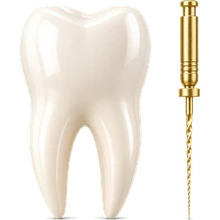
Inside every tooth is a soft pulp of nerves and vessels. When it becomes infected, the tooth can be saved with a root canal instead of an extraction. It is usually needed when the nerve is degenerating, the gums are tender or swollen, a tooth has discoloured with temperature sensitivity, or an abscess is forming.
The pulp becomes infected through deep decay, a cracked tooth, large or repeated fillings, or trauma. Once it is infected it will not heal on its own, and the infection can spread if it is left.
Root canal therapy follows a clear sequence.
Mild discomfort for a few days is normal and over-the-counter medication helps. Avoid chewing on the tooth until it is fully restored. Complications are uncommon but can include a separated file, fracture or a missed canal, and a failed treatment can be retreated or, rarely, extracted.
That is the goal. Removing the infected pulp lets you keep the natural tooth instead of extracting it, then a crown restores it.
The procedure is done under local anaesthesia. Afterward expect mild discomfort for a few days, managed with over-the-counter medication.