Why wisdom teeth come out
An impacted or partially erupted wisdom tooth can crowd and damage its neighbours, trap food and bacteria, or develop a cyst. Removing it heads off those problems before they spread.
Surgical care in-clinic, most often the removal of wisdom teeth, with sedation available for nervous patients.
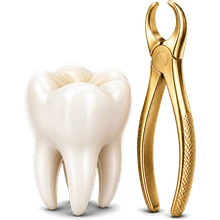
Most oral surgery here centres on wisdom teeth, the third molars. They are removed when they are impacted or only partly through and causing swelling, pain or infection, when they damage the teeth next to them or form cysts, or when an erupted one is hard to clean and has decayed.
An impacted or partially erupted wisdom tooth can crowd and damage its neighbours, trap food and bacteria, or develop a cyst. Removing it heads off those problems before they spread.
Extraction is done under local anaesthetic, which numbs the area completely. An elevator loosens the tooth, then forceps or a handpiece removes it. The team explains each step beforehand.
There is a slight chance of infection, tenderness, prolonged bleeding, dry socket or loosening of nearby teeth, which the team reviews with you. Earlier removal is generally better, since younger patients tend to heal faster.
Extractions are done under local anaesthetic, which numbs the area so you do not feel pain. Ask the front desk what sedation, if any, is available for your visit.
Generally yes. Earlier removal tends to be simpler and younger patients usually heal faster.